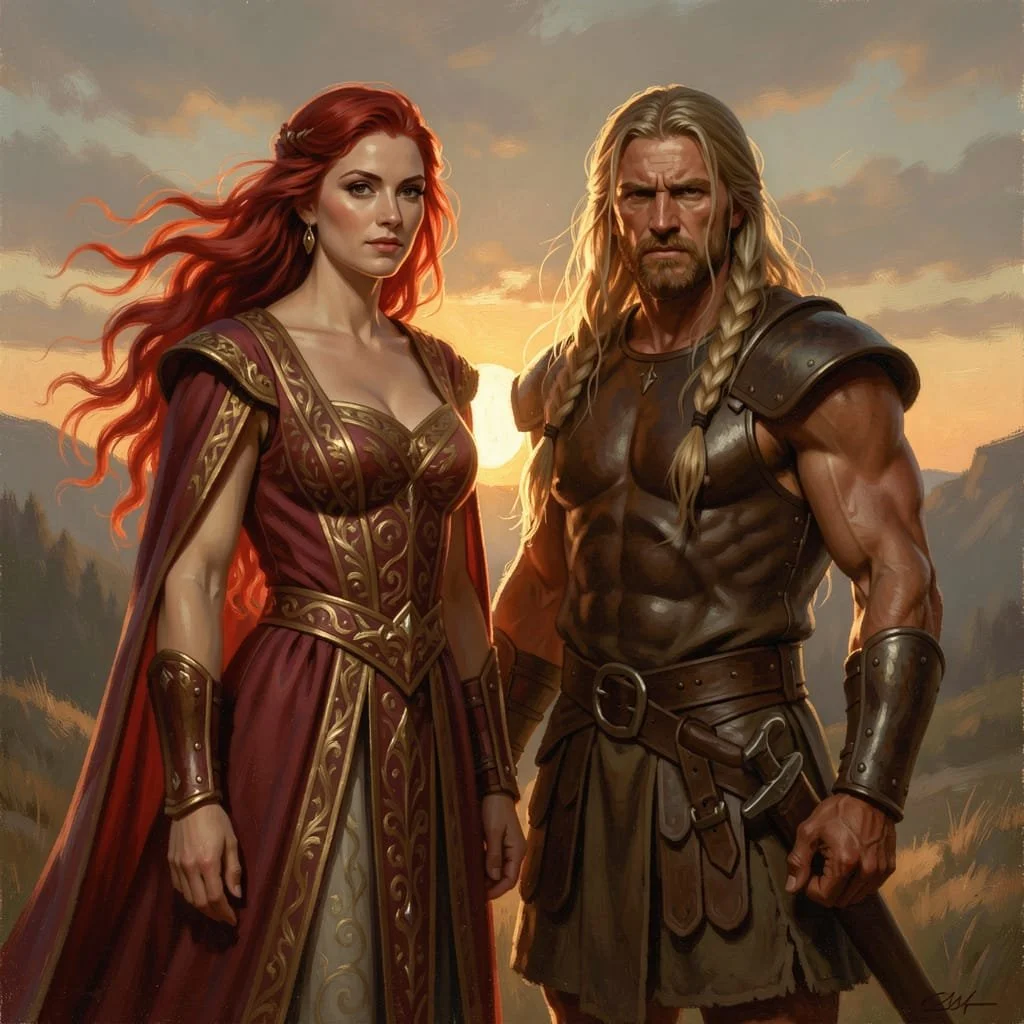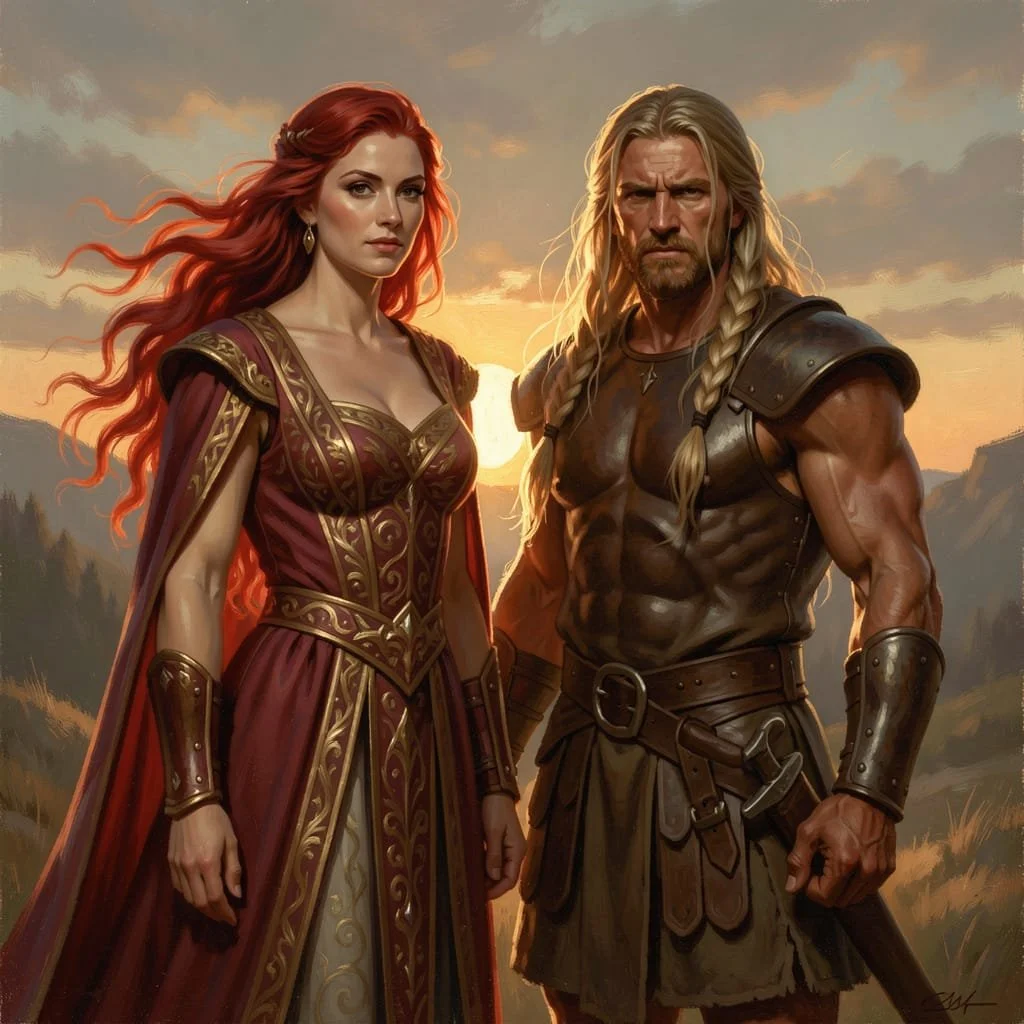
Writing this trilogy allowed me to give Cartimandua a voice. So little is known of her beyond a handful of historical facts, and within those limits I felt free to shape the Queen of the Brigantes as I imagined her. She had to be fierce. She ruled an entire tribe at a time when power and land were constantly contested. No woman without strength, strategy and presence could have held such a position in an age defined by conflict.
She had to be flawed, because history tells us that she was viewed by her contemporaries as morally wayward and accused by Roman writers of scandalous behaviour. Her orders and choices were questioned by Venutius her husband, the Roman governors and her own people, some of whom rose up against her in civil war as a result. I had to look at the historical facts of her situation and wonder what caused her to make the choices she made. But flawed or not, Cartimandua had to be intelligent, strategic and deeply human too.
I had set out to write a historical romance, so love had to play its part. For that, taking into account her factual reputation, I invented several lovers for Cartimandua, but only one true love. Across the trilogy, that love becomes a driving force, revealing its strength as well as the disasters it leaves in its wake. My Cartimandua is not a caricature of betrayal. She is a queen navigating impossible decisions in a world where every alliance carries a cost. She remains in my mind an enigma defined as much by her choices as by the mysteries that surround her.
Because I had now invented Eachann Beli Mawr, a lover for Cartimandua, I needed to create a world for him. I had to bring Cartimandua and Beli Mawr together, and I also needed to honour the historical presence of Venutius of the Carvetii, who became Cartimandua's husband and Consort King of Brigantia. The historical record is silent on how Cartimandua met Venutius, but I loved the challenge of imagining the moment their paths first crossed. It was like a huge jigsaw puzzle, with every piece needing to fit with every other. Laying out the known historical story was like laying out the four corners and the boundaries of the jigsaw, then choosing which pieces to fit where within those given boundaries. It was both frustrating and exciting in equal measure. Quite a few sleepless nights ensued as my brain worked out things like how to get Beli Mawr to Brigantia, and Venutius to Isurium. But eventually the pieces began to fit, and I began to live the journey.
I found it helpful to invent a genealogy for Cartimandua, and soon a whiteboard appeared on my office wall. I doubt anyone else could decipher the tangle of scribbles and notes I made, but they helped me stay focused on the edges of my vast puzzle, and from that, other characters grew. Elora the warrior, Donannu the priestess and fighter, Camulothe loyal guardian, her fictional family, and so many others, each one created to inhabit the gaps where history falls silent.
I have tried to be as authentic as possible, keeping to place names and Celtic names wherever I could. Readers often ask how to pronounce some of the words, and most of them are drawn from Scottish Gaelic, which is perhaps the closest echo we have of the ancient Celtic spoken in Brigantia during the Iron Age. Of course, no one truly knows what that language sounded like or what its reality might have been, so my answer is that you allow your brain to make the pronunciation, then stick with that. But I hope I've encouraged readers to pause and consider the ancient languages of Britain: those that existed long before the land was Romanised.