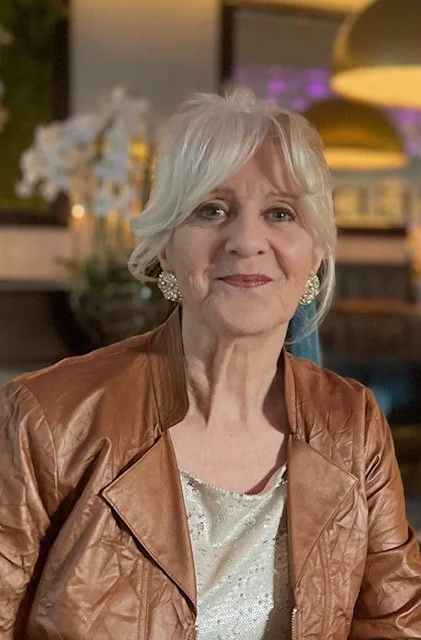
Q. What first inspired you to start writing stories?
A. I suppose it must have been in my genes. I always enjoyed English at school, and I still remember the day my English teacher asked me to read out the homework essay I’d written. It was funny unintentionally I think, but the whole class burst out laughing. My teacher was so delighted with my effort that she marched me around to every other classroom to read it to them too.
By the fifth performance, I was bored of my own brilliance. Overexposure at a young age… ha!
It actually put me off writing for a while. But looking back, that was probably the first moment I realised stories could make people feel something, even if that something was uncontrollable giggles.
I’ve had intentions to write at every point in my life. Truly, the desire was always there, tapping politely on my shoulder. But somehow the time was never available. Work took precedence. Family took precedence. Life, in all its noisy, demanding glory, took precedence.
I wrote short stories here and there, and even plotted a novel once, but I never quite found the space to sit down and actually get on with it. There was always something more urgent, more practical, more “grownup” that needed doing.
Writing became the thing I promised myself I’d return to “one day.” And, as it turns out, “one day” doesn’t arrive on its own. You have to claim it.
Q. What are the biggest challenges and joys in your writing process?
A: The challenges are always the same: time. How do I carve out a regular space to write? What has to be forfeited? For years, the answer was “everything else comes first.” Work, family, life - they all took precedence, and writing was the thing I promised myself I’d get to eventually.
But something shifted. I found the rhythm of writing, and now it’s a habit I don’t want to miss. I write for two to three hours almost every day, and it’s become one of the most grounding parts of my routine.
For me, writing a story feels like fitting a puzzle together. When the pieces finally connect, when a scene clicks into place or a character reveals something I didn’t expect, there’s this wonderful sense of satisfaction. It’s addictive in the best possible way.
Q: What sparked the idea for The Black Funeral Hat?
A: It all began when I was having coffee with some friends. They were telling me about their week, and casually mentioned they’d gone to a funeral, only to realise, once they were inside, that they were at the wrong funeral altogether.
As they described the moment, we all dissolved into that slightly guilty, slightly hysterical laughter that only comes from truly surreal situations. And while they were talking, my mind wandered off in its own direction. I couldn’t stop thinking about the awkwardness, the absurdity, the emotional whiplash of it all.
Something about that moment; the mix of grief, humour, and human error, just hooked me. I loved it. And from that tiny spark, the story began to grow.
Q: What do you hope readers feel when they finish the last page?
A: Mostly, I hope they feel a sense of satisfaction. If that isn’t the reward for reading a book, then I’m sure I don’t know what is. There’s something wonderful about closing a story and feeling that gentle exhale, the one that says, yes, that was worth the journey.
Then, I hope they’ve laughed. Laughter is the best tonic, and if I can make someone feel joy, even for a moment, then I have accomplished something in this often dark world of ours. Life is heavy enough; if my story can lift a little of that weight, or bring a smile at the right time, then I’ve done what I set out to do.