Women held power in the ancient world far more often than many people realise, yet their stories were frequently distorted or erased by later male historians. Across cultures, remarkable women rose to rule kingdoms, command armies, shape diplomacy and influence the course of empires. They deserve admiration not only for the authority they wielded, but for the determination, intelligence and resilience with which they moved through their world.
Cartimandua was a recognised queen of the Brigantes in ancient Britain, ruling one of the largest tribes in Britain. Her authority was established before the Romans arrived and she maintained her throne through diplomacy and internal alliances. She cooperated with Rome and used Roman support to maintain her rule. Her decisions were calculated for survival and stability.
Boudicca became queen of the Iceni through marriage to Prasutagus the king. She rose to prominence when Rome violated her family's rights. A war leader who embodied resistance, she rallied multiple tribes into a united military force. Her leadership was fiery, symbolic and rooted in vengeance and justice. Defiant and charismatic, she became a symbol of freedom and resistance, though her revolt ended in defeat.
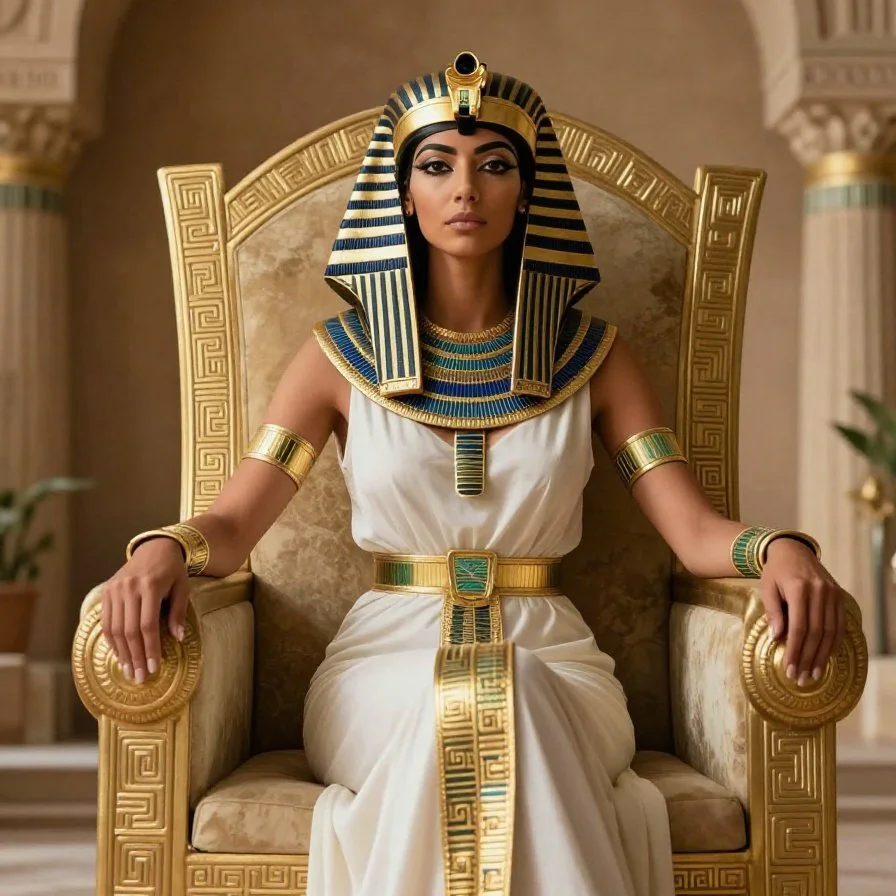
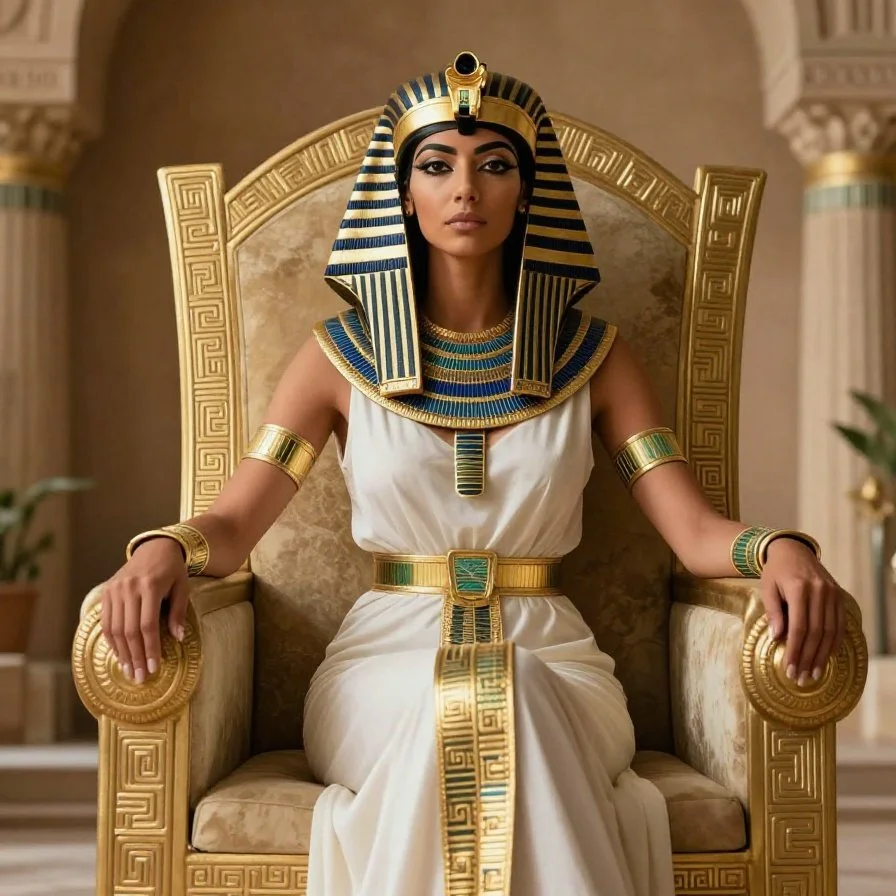
Cleopatra VII was the last active ruler of the Ptolemaic Kingdom of Egypt and one of antiquity's most skilled political leaders. Multilingual and highly educated, she embraced Egyptian culture and worked to stabilise a kingdom threatened by internal conflict and Roman expansion. Her alliance with Julius Caesar secured her throne and her later partnership with Mark Antony created a powerful eastern bloc within the Roman world. Their defeat by Octavian led to her suicide and the end of the Hellenistic era. Though long mythologised, Cleopatra is now recognised as a shrewd, charismatic ruler fighting to preserve Egypt's independence.
Olympias was the mother of Alexander the Great and one of the most politically influential women in ancient Macedon. As the wife of King Philip II, she played a central role in court politics and her fierce protection of Alexander helped secure his succession. Known for her intelligence, ambition and strong personality, she maintained significant authority during Alexander's campaigns and became a key power-broker after his death. During the turbulent Wars of the Successors, she acted decisively to defend her grandson's claim to the throne, though her enemies ultimately captured and executed her. Olympias remains a striking example of female power in a male-dominated world.
Artemisia I of Caria was a Greek-Anatolian queen and naval commander who ruled Halicarnassus under the Persian Empire. She is best known for fighting alongside Xerxes during the Greco-Persian Wars, commanding her own ships at the Battle of Salamis in 480 BCE. Her tactical skill impressed even her enemies; Herodotus records that Xerxes valued her advice above that of his male generals. Bold, politically astute and unafraid to act independently, Artemisia stands out as one of the few women in antiquity to wield both royal authority and military command.
These and other women who held power in a world dominated by men remind us that women have always found ways to lead, to endure and to shape the course of history. But for all the admiration we may hold for figures like these, one queen stands out for me: a ruler whose strength lay not in spectacle or legend, but in the quiet, calculated mastery of survival. Cartimandua of Brigantia.
Cartimandua's military strength lay in her strategic ability to win without fighting. Unlike Cleopatra, whose naval ambitions ended in disaster, or Olympias, whose violent manoeuvring led to her execution, Cartimandua preserved her kingdom through shrewd alliances, precise timing and political control of her warriors. Even Artemisia, a proven battlefield commander, ultimately served the ambitions of a greater empire. Cartimandua alone used diplomacy as a weapon, outmanoeuvring rivals, manipulating tribal loyalties and maintaining power in a landscape where open war meant annihilation. Her superiority lay in survival, achieving through strategy what others attempted through force.
This is one of the reasons I find Cartimandua so intriguing: she mastered the art of survival in a world where most leaders, male or female, were destroyed by war or ambition. While others fought and fell, she held her kingdom together through canny judgement, strategic alliances and an instinct for timing that outmatched both her rivals and her Roman overlords.