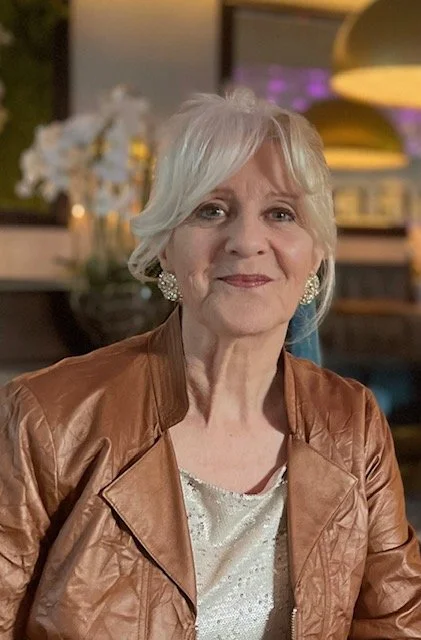
Being a Yorkshire lass possibly gives me a bias as to the beauty and wonder of what Yorkshire people call God's own County.
To me, Yorkshire's cities feel alive, full of familiar voices, old stone streets, and the kind of everyday bustle that makes you feel part of something bigger. They're places where history sits right beside modern life and where the people give the city its warmth and character. Yorkshire folk are known for that mix of straight-talking honesty and warm, no-nonsense friendliness.
Yorkshire is famous for its pudding, the Brontë sisters, beautiful countryside, historic landmarks, Wensleydale cheese, the Rhubarb Triangle, Sheffield steel and the first football club. But deep beneath her feet lie the remains of all the years that came before, layer upon layer of lives, stories and forgotten footsteps leaving hints of the past in the archaeology of the land. Hillforts, ritual sites, henges and standing stones have left their identity stamped on the land and in my heart.
York, once called Eboracum, still displays her Roman ancestry with pride, her ancient walls open for modern visitors to walk upon as they trace the lines of the old fortress. Not far away, the Stanwick Iron Age Fortifications near Forcett form one of the greatest Brigante power centres ever discovered. The ramparts stretch for nearly four miles and enclose more than 700 acres. It was almost certainly the seat of Brigantia's authority, a stronghold that dominated the northern landscape long before the Romans arrived. Aldborough (Isurium Brigantum) has the remains of a Roman town including mosaics and defensive walls. Catterick (Cataractonium) was a major Roman settlement and military site on Dere Street. Many sites have a place within the Cartimandua Trilogy.
Rural Yorkshire is a place of rolling hills, stone walls and quiet villages, where farming shapes daily life and the land feels both tough and beautiful. Iron Age farms in Yorkshire were small, hardy and built to withstand the windswept landscapes of the Dales, Wolds and Moors, like the people who worked on them. Archaeology gives us a surprisingly detailed picture of how people lived, worked and shaped the land long before the Romans arrived.
In the vastness, in the silence, in the way the light breaks suddenly across the hills, the moors still feel ancient and unbroken. It is wild ground that has endured everything and still stands. Even in the bleakness there is a quiet splendour, a reminder that some places are shaped not by people, but by time, weather and the long patience of the earth itself. It was this belief that the Brigante people held in their hearts. It is easy to stand in these bleak places now and feel how little has changed in two thousand years on from the Iron Age. Yorkshire still carries that same restless energy, that same haunting mixture of desolation and glory.
Standing on the edges of the wild moors, I can understand how Emily Brontë might have imagined Wuthering Heights. She understood the contradictions of the space: the savagery and the beauty, the loneliness and the freedom. The Yorkshire landscape shouts of love and fury, isolation and belonging, despair and fierce resilience. Its fells and coastal areas remind me that I belong to a landscape shaped by thousands of years of human hands and natural forces working together in a slow, unspoken conversation. Walking across the moors or along the Yorkshire coast, I know I am not just moving through space. I'm moving through history. The presence of those who lived, worked, worshipped and dreamed here long before my time is strong and tangible. Their world may be buried, but it still speaks and I carry that echo in my heart. I dare anyone to travel there and not hear the whispers of the Queen of Brigantia as she rides out over her lands.
Being a Yorkshire lass isn't just about where I live; it's about feeling rooted in a land that remembers everything. The Yorkshire voice can still be heard if you stand still long enough to listen.